

Taxol: An Important Cancer Medicine
- scisynapse magazine
- Jan 6, 2025
- 2 min read

Updated: Jan 8, 2025
Introduction
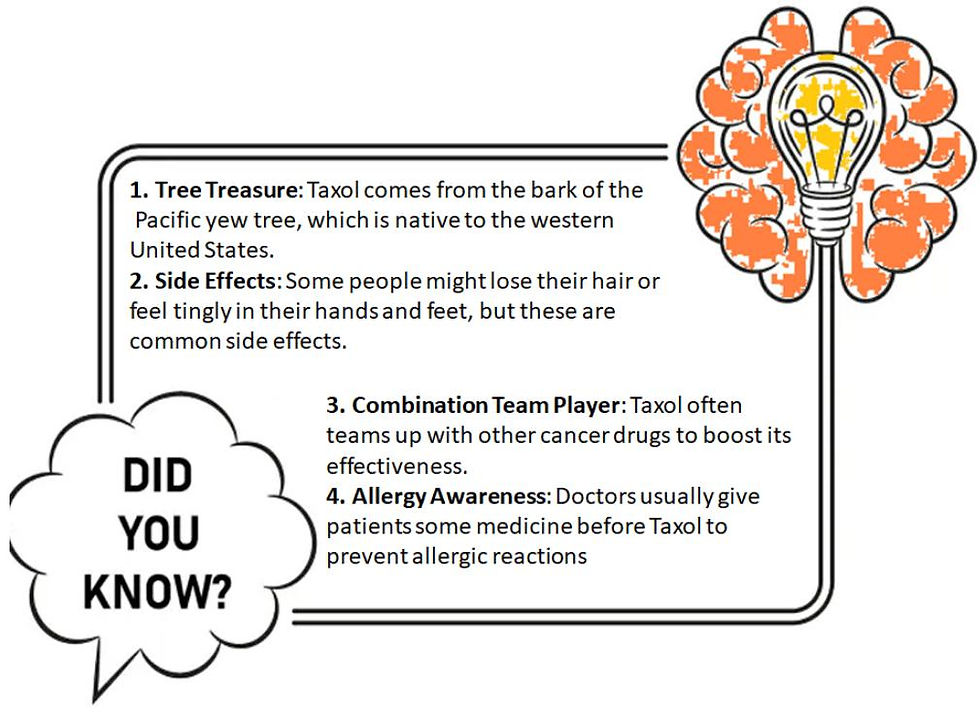
Taxol, also called paclitaxel, is a medicine used to treat cancer. It comes from the bark of the Pacific yew tree.
Since its discovery in the 1960s and approval for use in the 1990s,

Taxol has helped many people, especially
those with breast, ovarian, and lung
cancer.
How It Works
Taxol works by stopping cancer cells from dividing.
It affects tiny structures in the cell called microtubules which help cells split apart during division.

By keeping these structures stable, Taxol prevents cancer cells from growing and multiplying.
Uses
Taxol is mostly used for:
Breast cancer: It is often used with other medicines for both early and advanced stages.
Ovarian Cancer: Taxol is a key part of treatment for advanced cases
Lung Cancer: It is used in combination with other drugs for advanced non-small cell lung cancer.
Researchers are also studying Taxol for other types of cancers, such as bladder cancer.
Side Effects
While Taxol is effective, it can cause side effects, such as:
Low blood cell counts: This can lead to a higher chance of infections.
Nerve damage: Some people may feel tingling or pain in their hands and feet.
Allergic reactions: Some patients might have allergic responses, so doctors often give medicines to prevent this.
Nausea and vomiting: Many patients experience stomach issues, but these can usually be managed with other medications.
How it’s Given
Taxol is usually given through an intravenous (IV) line in a hospital or clinic. The dose depends on the type of cancer and the treatment plan. It can be used alone or with other cancer drugs.

Environmental Concerns
Getting Taxol from the Pacific yew tree raised concerns about harming the environment because of overharvesting.
To address this, scientists have created synthetic versions of Taxol, like Docetaxel (Taxotere), which do not harm trees.
Written By: Zunaira Usman

Comments